If you’ve ever had a hydraulic hose fail during harvest, in the middle of a construction project, or while loading materials, you know the frustration. One minute your equipment is running smoothly, the next you’re dealing with spraying hydraulic fluid, stopped operations, and mounting costs as every hour ticks by.
The reality is that most hydraulic hose failures don’t just happen – they announce themselves well in advance through visible warning signs. At Abundant Welding and Hydraulics, we’ve responded to countless emergency hydraulic breakdowns across the Riverina region, and the story is almost always the same: the failure could have been prevented with proper inspection and maintenance.
With our extensive experience servicing hydraulic systems and our partnership with Ryco Hydraulics Australia, we’ve seen firsthand what causes hoses to fail and, more importantly, how to prevent it. This guide shares that knowledge to help you avoid the downtime, expense, and stress of hydraulic system failures.
Understanding the True Cost of Hydraulic Failures
Before we dive into prevention, it’s worth understanding what’s actually at stake when a hydraulic hose fails. Direct costs include:
- Lost productivity during equipment downtime (could be thousands of dollars per hour during harvest)
- Emergency callout fees for mobile repairs
- Premium pricing for urgent hose replacements
- Potential damage to other system components from contamination
- Cleanup costs for hydraulic fluid spills
Hidden costs that add up:
- Missed deadlines and project delays
- Idle labor while equipment is down
- Rental equipment costs if you need temporary replacement
- Environmental cleanup if spills are significant
- Stress and workflow disruption for your entire operation
For agricultural operations, a hydraulic failure during peak harvest season can mean the difference between getting a crop in at optimal condition or facing weather damage and grade downgrades. For construction sites, it means missed project milestones and potential contract penalties.
The good news? Most hydraulic hose failures are completely preventable with proper maintenance and inspection.
Common Hydraulic Hose Failure Modes
Understanding how hoses fail helps you know what to look for during inspections. Hydraulic hoses don’t all fail the same way – different operating conditions and installation errors create distinct failure patterns.

As you can see from the image above, hydraulic hoses typically fail through six main mechanisms:
- Abrasion – External wear from rubbing against surfaces
- Cover cracking – Surface deterioration from environmental exposure
- Leaking behind fittings – Improper installation or fitting degradation
- Damaged fittings – Physical impact or corrosion
- Trapped or kinked hoses – Improper routing causing restricted flow
- Exposed reinforcement – Advanced deterioration where internal wires become visible
Each of these failure modes is preventable through proper installation, routing, and regular inspection. Let’s look at how to prevent them.
Factors That Shorten Hydraulic Hose Life
Before we get into the prevention steps, it’s important to understand what accelerates hydraulic hose wear in Australian operating conditions.
Environmental factors:
- Extreme heat – Our harsh Australian summers can cook hydraulic hoses, especially when equipment operates in full sun
- UV exposure – Constant sunlight degrades rubber compounds over time
- Abrasion – Dust, dirt, and debris act like sandpaper on exposed hoses
- Chemical exposure – Fertilizers, fuels, and other chemicals can attack hose materials
- Temperature cycling – Daily temperature swings from cold mornings to hot afternoons stress hose materials

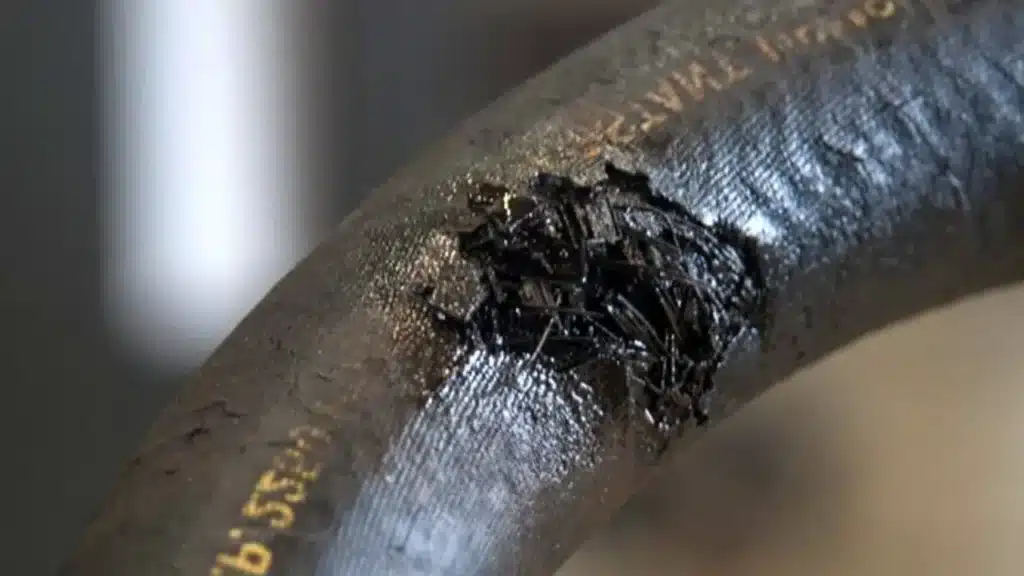
This image shows what happens when a hydraulic hose is subjected to excessive heat – the outer cover has completely degraded, exposing the wire reinforcement beneath. Once you reach this stage, catastrophic failure is imminent. The hose shown here was still technically “working” when discovered during inspection, but would have failed catastrophically within hours or days of continued operation.
Operating conditions:
- Pressure spikes – Sudden pressure surges from rapid valve movements
- Vibration – Constant movement causing fatigue at connection points
- Flexing – Repeated bending beyond minimum bend radius specifications
- Contaminated hydraulic fluid – Dirt and debris accelerating internal wear
Installation factors:
- Incorrect hose length – Too short creates tension, too long allows sagging and abrasion
- Sharp routing – Bends tighter than minimum radius specifications
- Lack of protection – No guards or sleeves in high-abrasion areas
- Improper support – Missing clamps allowing excessive movement
7 Essential Steps to Prevent Hydraulic Hose Failures
Now let’s get into the practical steps you can take to dramatically extend your hydraulic hose life and prevent unexpected failures.
Conduct Regular Visual Inspections
Your first line of defense is simply looking at your hoses regularly. Daily pre-operation checks should include a quick visual scan of all visible hydraulic hoses.
What to look for during inspections:
Surface condition:
- Cracks, cuts, or abrasion on the outer cover
- Blisters or bubbles indicating internal damage
- Exposed wire braid or reinforcement
- Softening or degradation of rubber material
- Discoloration that indicates heat damage
The surface cracking shown in this image is exactly what you’re looking for during visual inspections. These cracks indicate the hose cover is aging and losing its protective properties. While this hose might still be holding pressure, the cracks allow moisture and contaminants to reach the reinforcement layer, accelerating internal corrosion. Catching this early means scheduling a planned replacement rather than dealing with an emergency failure.
Fitting condition:
- Corrosion or damage to metal fittings
- Leaks or seepage around crimped connections
- Loose fittings that can be turned by hand
- Cracks in the ferrule or fitting body
Physical damage:
- Kinks or sharp bends that restrict flow
- Twisted hoses that create stress points
- Evidence of rubbing or contact with other components
- Damage from impact or pinching
Make it routine: The best approach is to incorporate hydraulic hose inspection into your daily pre-operation walkaround. It only takes a few extra minutes and can save you hours of downtime.
Ensure Proper Hose Routing and Support
How a hydraulic hose is installed has a massive impact on its service life. Poor routing is one of the most common causes of premature hose failure.
Follow these routing principles:
Avoid sharp bends:
- Never bend hoses tighter than the manufacturer’s minimum bend radius
- Position fittings to allow gradual curves rather than sharp angles
- Use elbows and adapters to change direction rather than forcing hose bends
Prevent abrasion:
- Keep hoses away from sharp edges, hot surfaces, and moving parts
- Use protective sleeves in areas where contact is unavoidable
- Install cushion clamps rather than hard metal clamps that can cut into hoses
- Route hoses inside equipment frames when possible
Allow for movement:
- Provide enough length for equipment articulation without creating tension
- Ensure hoses can flex with equipment movement without stretching
- Consider the full range of motion when positioning hoses
- Avoid routing that causes hoses to rub during normal operation
Support properly:
- Install clamps at regular intervals to prevent sagging
- Position clamps to prevent hose twisting or rotation
- Use proper spacing between support points based on hose size
- Ensure clamps don’t restrict hose movement during equipment operation
Operate Within Pressure and Temperature Ratings
Every hydraulic hose has specific pressure and temperature ratings for a reason – exceeding them dramatically shortens hose life and risks catastrophic failure.
Pressure considerations:
- Know the maximum working pressure for each hose in your system
- Understand that pressure spikes during sudden valve closures can exceed normal operating pressure
- Don’t use pressure ratings as “targets” – operate well below maximum ratings when possible
- Consider pressure surges when selecting hose ratings for applications with rapid cycling
Temperature management:
- Hydraulic hose performance degrades significantly above recommended temperatures
- Route hoses away from exhaust systems, engines, and other heat sources
- Consider heat-resistant hoses for high-temperature applications
- Remember that hydraulic fluid itself generates heat during operation
- In extreme heat conditions, consider auxiliary cooling or heat shields
Australian conditions matter: Our climate can push equipment to its limits. What might be acceptable routing in cooler climates can lead to rapid failure when hoses are baking in 40°C+ summer temperatures while handling hot hydraulic fluid under high pressure.
Maintain Hydraulic Fluid Quality
Clean hydraulic fluid is essential for hose longevity. Contaminated fluid acts like liquid sandpaper on the inside of hoses, accelerating wear from the inside out.
Fluid maintenance practices:
- Change hydraulic fluid at manufacturer-recommended intervals
- Use high-quality filters and replace them regularly
- Check fluid condition regularly for signs of contamination
- Address leaks immediately rather than just topping up fluid
- Keep hydraulic tanks and reservoirs clean
- Use proper filling procedures to prevent contamination
Warning signs in hydraulic fluid:
- Dark or discolored fluid indicates oxidation or contamination
- Milky appearance suggests water contamination
- Metallic particles indicate internal component wear
- Burnt smell means overheating
- Foaming indicates air in the system
Implement a Planned Replacement Schedule
Not all hose failures can be prevented through inspection alone. Rubber and synthetic materials have a finite service life, and eventually all hydraulic hoses need replacement regardless of their appearance.
Develop a replacement schedule based on:
- Operating hours – Track hours and replace based on manufacturer recommendations
- Operating conditions – Harsh conditions warrant shorter replacement intervals
- Age – Even hoses with low hours deteriorate over time (typically 5-10 years maximum)
- Application criticality – Replace critical hoses more frequently to avoid operational impact
- Historical data – Track failures to identify problem areas needing shorter intervals
Practical scheduling approach:
Many operations find success with a “replace on condition” approach for some hoses combined with scheduled replacement for critical circuits. During equipment downtime for other maintenance (like annual service), replace hoses showing any warning signs rather than waiting for failure.
Document everything:
- Keep records of when hoses were installed
- Note operating conditions and environment
- Track failures to identify patterns
- Use date marking on hoses during installation
- Maintain records by equipment and circuit
Use Quality Components From Reputable Suppliers
Not all hydraulic hoses are created equal. Using premium quality hoses designed for your specific application pays dividends in reliability and service life.
The Ryco Advantage:
At Abundant Welding and Hydraulics, we’ve partnered with Ryco Hydraulics Australia because we’ve seen the difference quality makes. Ryco is part of the global Manuli Ryco Group and manufactures premium quality hoses and fittings specifically engineered for Australian operating conditions.
What sets quality hoses apart:
- Superior compound formulations that resist heat, UV, and chemical exposure
- Consistent manufacturing quality ensuring hoses meet specifications
- Proper reinforcement design for the application
- Reliable fittings that maintain seal integrity
- Traceability and documentation for critical applications
- Technical support from manufacturers who understand Australian conditions
False economy of cheap hoses:
We’ve seen countless situations where cheap replacement hoses fail within months, while premium quality hoses from manufacturers like Ryco last for years in the same application. The initial cost difference becomes insignificant compared to the reliability difference and avoided downtime.
Address Issues Immediately
When you spot a problem during inspection, address it promptly. Small issues become big problems quickly in hydraulic systems.
Don’t delay on:
- Any visible leaks, no matter how minor
- Abrasion damage that’s wearing through the outer cover
- Kinked or bent hoses restricting flow
- Loose or damaged fittings
- Signs of heat damage or cover deterioration
- Hoses that have been contaminated with chemicals
The inspection-to-action process:
- Identify the issue during daily inspection
- Assess severity – immediate shutdown needed or schedule repair?
- Source quality replacement parts
- Schedule repair during planned downtime when possible
- Document the failure and location for future reference
When to Call for Professional Hydraulic Service
While many hydraulic maintenance tasks can be handled in-house, some situations call for professional expertise and equipment.
Call experienced hydraulic technicians for:
Complex repairs:
- Multiple simultaneous hose failures indicating system problems
- Contamination issues requiring system flushing
- Pressure problems that could indicate pump or valve issues
- Recurring failures in the same location
Specialised equipment needs:
- Custom hose assemblies for unusual fittings or configurations
- High-pressure applications requiring certified assemblies
- Mobile equipment where hose routing is complex
- Precision fitting of replacement hoses
Time-critical situations:
- Equipment failures during critical operations (harvest, deadlines)
- Situations where downtime costs exceed service call costs
- Remote locations where transporting equipment isn’t practical
- After-hours emergencies when your normal operations can’t wait
The Abundant Hydraulics Mobile Advantage
At Abundant Welding and Hydraulics, we understand that hydraulic failures don’t wait for convenient timing.
Our mobile service capabilities include:
- Fully equipped service vehicles with extensive hose inventory
- On-site hydraulic hose assembly and replacement
- Emergency breakdown response across the Riverina region
- Experience with all major equipment brands and manufacturers
- Quality Ryco components for reliable, long-lasting repairs
Why mobile service makes sense:
- Your equipment stays at your location – no transport time or costs
- We come to you with everything needed for the repair
- Minimizes operational disruption
- Faster response than transporting equipment to a workshop
- Work can continue around the repair in many cases
Our service area:
Based in Wagga Wagga, we provide mobile hydraulic service across the broader Riverina region. Our technicians understand the operating conditions your equipment faces and can provide practical solutions for the specific challenges you encounter.
Preventive Maintenance Pays Off
The difference between planned hydraulic hose replacement and emergency repairs goes far beyond just the parts cost. Consider this comparison:
Planned replacement:
- Schedule during convenient downtime
- Order quality components at normal pricing
- Complete work efficiently with proper preparation
- Inspect system thoroughly while hoses are off
- Replace multiple aging hoses in one service
- No operational disruption
Emergency repair:
- Equipment down at worst possible time
- Rush fees for after-hours service or premium parts
- Limited time to diagnose underlying issues
- Single hose replacement, leaving other aging hoses
- Operational chaos and workflow disruption
- Potential secondary damage from hydraulic fluid loss
The ROI of prevention:
Operations that implement regular hydraulic hose inspection and planned replacement typically see:
- 70-80% reduction in emergency hydraulic failures
- Significantly lower annual hydraulic maintenance costs despite more frequent planned services
- Better equipment reliability and uptime
- Longer service life from hydraulic components overall
- Reduced environmental issues from hydraulic fluid leaks
Quality Matters: The Ryco Difference
Our partnership with Ryco Hydraulics Australia reflects our commitment to providing reliable, long-lasting hydraulic solutions. Ryco brings global expertise to Australian conditions through the Manuli Ryco Group network, combined with local manufacturing and support.
What Ryco brings to your operations:
- Premium quality hoses formulated for extreme conditions
- Extensive range covering all common applications
- Technical support and proper application guidance
- Consistent quality you can depend on
- Rapid availability through our partnership
When you choose Abundant Welding and Hydraulics for your hydraulic needs, you’re getting both quality Ryco components and experienced installation and service. It’s a combination that delivers reliability you can count on.
Take Action Before Problems Strike
Hydraulic hose failures are largely preventable, but prevention requires consistent attention. The daily visual inspections, proper installation practices, and planned replacement schedules we’ve discussed in this guide aren’t complicated – they just need to be done consistently.
The choice is yours: invest a few minutes each day in inspection and prevention, or deal with the costly consequences of emergency failures at the worst possible times.
Get Expert Hydraulic Support
Whether you need routine hydraulic hose replacement, emergency mobile service, or advice on preventing failures in challenging applications, Abundant Welding and Hydraulics is here to help.
Our hydraulic services include:
- Mobile hydraulic hose repair and replacement
- Custom hydraulic hose assemblies
- Preventive maintenance programs
- System troubleshooting and optimisation
- Quality Ryco hydraulic components
- Expert installation and service