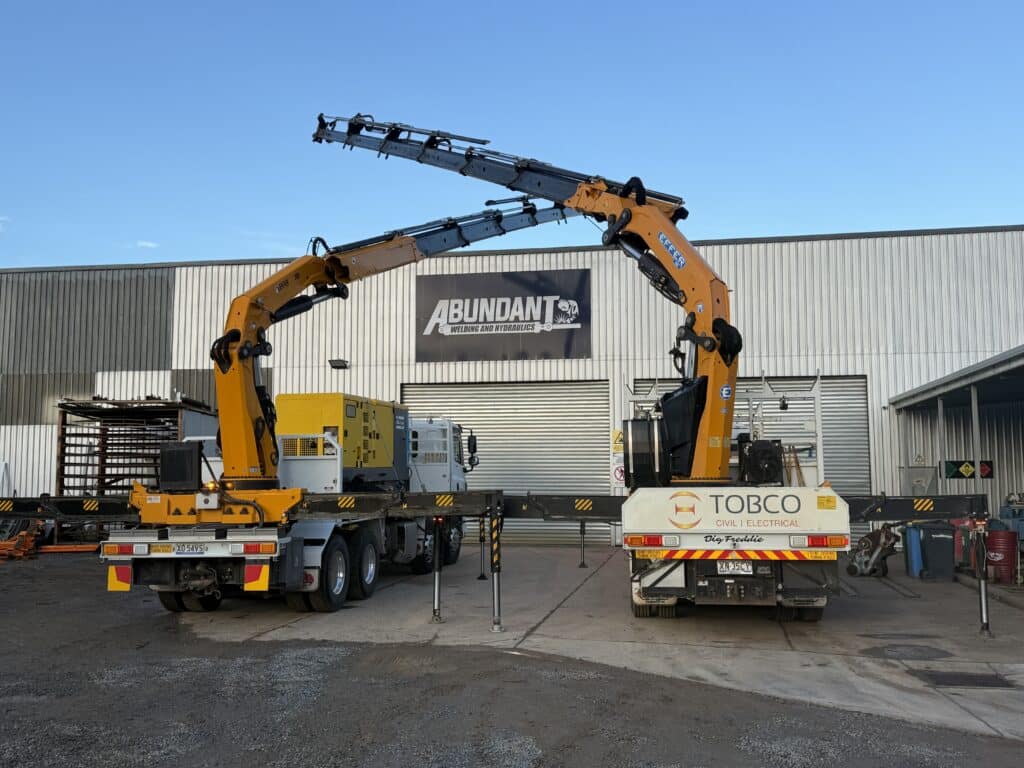
Aerial access equipment plays a critical role in countless operations across the Riverina region, from construction sites and utility maintenance to agricultural applications and industrial facilities. Whether you’re running Terex, Versalift, GMJ, or Nifty-Lift equipment, keeping your Elevated Work Platforms (EWPs) in safe operating condition isn’t just good practice – it’s a legal requirement and essential for protecting your workers.
At Abundant Welding and Hydraulics, we’ve seen firsthand how early detection of equipment issues can prevent costly breakdowns and serious workplace incidents. With years of combined experience servicing aerial access equipment and truck mounted loading cranes across Wagga Wagga and surrounding regions, our team knows what warning signs to watch for before minor problems become major safety hazards.
Why Regular EWP Inspections Matter
Australian Standards require regular inspections of aerial access equipment to ensure workplace safety and regulatory compliance. Beyond meeting your legal obligations, proper maintenance and timely inspections deliver real benefits for your bottom line:
- Minimise costly downtime by catching issues before they cause breakdowns
- Extend equipment lifespan through preventive maintenance
- Protect your workers by ensuring all safety systems function correctly
- Maintain insurance coverage by meeting manufacturer and regulatory requirements
- Avoid penalties from workplace safety violations
The good news? Most serious equipment failures give you warning signs well before they occur. Knowing what to look for can help you schedule inspections proactively rather than dealing with emergency repairs.
1. Unusual Noises During Operation
Your aerial access equipment or truck mounted crane should operate relatively smoothly. If you’re hearing grinding, squealing, or knocking sounds that weren’t there before, something’s changed – and not for the better.
What to listen for:
- Grinding noises often indicate worn bearings or damaged gears
- Squealing sounds can signal hydraulic pump issues or belt problems
- Knocking or banging may point to loose components or structural concerns
- Whining from the hydraulic system could mean contaminated fluid or pump wear
Why it matters: Unusual noises are your equipment’s way of telling you that components are wearing abnormally or failing. What starts as a minor noise can quickly escalate to complete system failure if left unaddressed.
What to do: Document when and where the noise occurs, note any patterns, and schedule an inspection with experienced technicians who can diagnose the root cause before it becomes an emergency breakdown.
2. Hydraulic System Performance Changes
The hydraulic system is the heart of your aerial access equipment, powering the boom movements and platform controls that your operators depend on. Any changes in how the hydraulics perform deserve immediate attention.
Watch for these signs:
- Sluggish or jerky movements when raising, lowering, or extending the boom
- Visible hydraulic fluid leaks around hoses, fittings, or cylinders
- Inconsistent operation where controls don’t respond as expected
- Loss of lifting capacity or inability to reach full extension
- Overheating in the hydraulic system during normal operations
Why it matters: Hydraulic problems don’t just affect performance – they create serious safety risks. Loss of hydraulic pressure at height can leave operators stranded, while catastrophic hydraulic failures can result in uncontrolled boom movements or platform drops.
Our team services hydraulic systems across all major EWP brands. We understand the specific requirements of each manufacturer’s system and can identify problems that less experienced technicians might miss.
3. Electrical System Malfunctions
Modern aerial access equipment relies on sophisticated electrical and control systems. From safety interlocks to load sensing systems, these electronic components are critical for safe operation.
Common electrical warning signs:
- Control panels displaying error codes or warning lights
- Intermittent or non-responsive controls
- Safety systems failing to engage properly
- Battery charging issues or power supply problems
- Corroded electrical connections or damaged wiring
Why it matters: Electrical malfunctions can disable critical safety features like overload protection, emergency lowering systems, or ground control functionality. These aren’t just inconveniences – they’re serious safety hazards that can put operators and ground crew at risk.
Special considerations: Many electrical problems are weather-related or develop gradually through exposure to harsh Australian conditions. Regular inspections can catch corrosion, damaged insulation, or loose connections before they cause system failures.
4. Structural Issues and Visible Damage
The structural integrity of your aerial access equipment is non-negotiable. Even minor damage can compromise the entire platform’s safety, particularly when operating at height under load.
Physical damage to look for:
- Cracks in the boom, platform, or chassis
- Bent or deformed structural members
- Excessive rust or corrosion, especially at joints and welds
- Damaged or fraying cables and hoses
- Loose or missing bolts and fasteners
- Platform floor damage or deterioration
- Cracked or damaged welds
Why it matters: Structural damage rarely improves on its own. What might look like surface corrosion could be hiding significant material loss, while a small crack can propagate under stress until catastrophic failure occurs.
At Abundant Welding and Hydraulics, our welding expertise means we can properly assess structural damage and provide professional repairs that meet Australian Standards. We’ve seen equipment that’s been “temporarily patched” create dangerous situations – proper structural repairs require the right skills and materials.
5. Irregular Maintenance History or Overdue Services
Sometimes the biggest warning sign isn’t on the equipment itself – it’s in the service records (or lack thereof).
Red flags in maintenance records:
- Missing or incomplete service documentation
- Skipped scheduled maintenance intervals
- Operating hours that far exceed recommended service intervals
- No record of required annual safety inspections
- Multiple operators reporting the same recurring problems
Why it matters: Equipment that hasn’t received proper preventive maintenance is essentially a time bomb. Skipped services mean wear items haven’t been replaced, fluids haven’t been changed, and safety-critical components haven’t been inspected. The money saved by delaying maintenance is nothing compared to the cost of equipment failure, workplace incidents, or regulatory penalties.
Australian Standards requirements: Under AS2550.11, aerial access equipment requires regular inspections based on usage and operating conditions. If your equipment is operating without current inspection records, you’re not just risking equipment failure – you’re potentially in violation of workplace safety regulations.
When to Schedule Professional EWP Inspections
While daily pre-operation checks are essential, professional inspections by experienced technicians should occur at these intervals:
Scheduled maintenance inspections:
- Every 250 operating hours or 3 months (whichever comes first) for active equipment
- Annually for equipment with lower usage
- After any incident, collision, or overload event
- Before returning equipment to service after extended storage
Don’t wait for annual inspections if you notice:
- Any of the warning signs mentioned above
- Changes in how the equipment operates
- Operator concerns about equipment behaviour
- Equipment that’s been subjected to harsh conditions or heavy use
Why Choose Abundant Welding and Hydraulics for EWP Service
Our team brings specialized expertise to aerial access equipment maintenance and repairs. Here’s what sets us apart:
Experience across major brands: We service Terex, Versalift, GMJ, and Nifty-Lift equipment, understanding the specific requirements and common issues for each manufacturer.
Comprehensive capabilities: From hydraulic system repairs to structural welding, electrical troubleshooting to preventive maintenance, we handle the full range of EWP service needs.
Mobile service available: We understand that downtime costs you money. Our mobile service capabilities mean we can perform many repairs and inspections at your site, minimizing disruption to your operations.
Local expertise, regional coverage: Based in Wagga Wagga, we serve the broader Riverina region. Our technicians understand the operating conditions your equipment faces and can provide practical solutions for the challenges you encounter.
Take Action Before Problems Escalate
Equipment failures rarely happen without warning. Those strange noises, sluggish hydraulics, or electrical quirks you’ve been noticing? They’re your equipment telling you it needs attention.
The question isn’t whether problems will develop – it’s whether you’ll address them proactively or reactively. Scheduled inspections and preventive maintenance cost a fraction of what you’ll pay for emergency repairs, equipment replacement, or workplace incident investigations.
Schedule Your EWP Inspection Today
Don’t wait until a minor issue becomes a major problem. Contact Abundant Welding and Hydraulics to schedule a comprehensive inspection of your aerial access equipment (including truck mounted loading cranes). Our experienced technicians are ready to keep your aerial access equipment or crane operating safely and efficiently. Whether you need scheduled maintenance, troubleshooting for specific issues, or comprehensive inspection services, we deliver the expertise and service quality your operations demand.